

Vector-borne Diseases
Mosquitoes, ticks, and fleas that spread pathogens are called vectors. A person who isgets bitten by a vector and gets sick could have a vector-borne disease. Examples of vector-borne diseases include Dengue fever, West Nile Virus, Lyme disease, and Malaria.
How to Protect Yourself
Before Going Outside
- Use EPA-registered Insect Repellent.
- Wear loose-fitting, long clothing to protect yourself from mosquitoes and tick bites.
- Tuck your pants into your socks for best practice tick avoidance.
After Being Outside
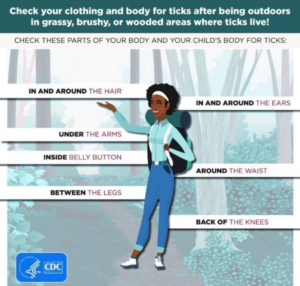
- Check your body and clothing for ticks after being outdoors. Remember to inspect children, gear, and pets for ticks as well.
- Take a shower within 2 hours of coming indoors to help wash off unattached ticks and to check your body for ticks.
Around Your Home
- Use air conditioners and screens to keep mosquitoes from coming inside.
- Empty standing water. Mosquitoes lay eggs in or near water.
CDC Vector-Borne Diseases: How to Prevent Mosquito and Tick Bites